Google AI Mode Multiturn Ads: How Multi-Location Brands Win the Follow-Up Question
Google now shows ads on follow-up questions inside AI Mode conversations. Here is what is confirmed and how multi-location brands get ready for those later, more specific turns.
· 6 min read

The short answer
Google AI Mode multiturn ads are sponsored placements that appear on the answers to follow-up questions inside one AI Mode conversation, in addition to the first answer. Google announced the format for the United States on October 28, 2026, and Search Engine Roundtable saw it live on November 6, with ads labeled "Sponsored" under the second, third and fourth follow-up answers. For dental groups, childcare centers, clinics and local service brands, the opportunity sits in those later turns, where questions get specific: hours, insurance, ages served, price and distance.
The follow-up question is often the buying question. Have a clear answer ready for it.
Why follow-up questions matter for local lead generation
A first search in AI Mode tends to be broad. A parent asks about preschools nearby, a patient asks about dental implants, a homeowner asks who repairs water heaters. The follow-ups narrow the decision: which center has early drop-off, which office takes a certain insurance plan, who can come out this week.
Search Engine Land's write-up of the announcement follows the same arc, describing someone researching running shoes who starts with a general question and then asks about cushioning, durability and fit for an activity. Multiturn ads give advertisers a way to reach people as those conversations become more specific.
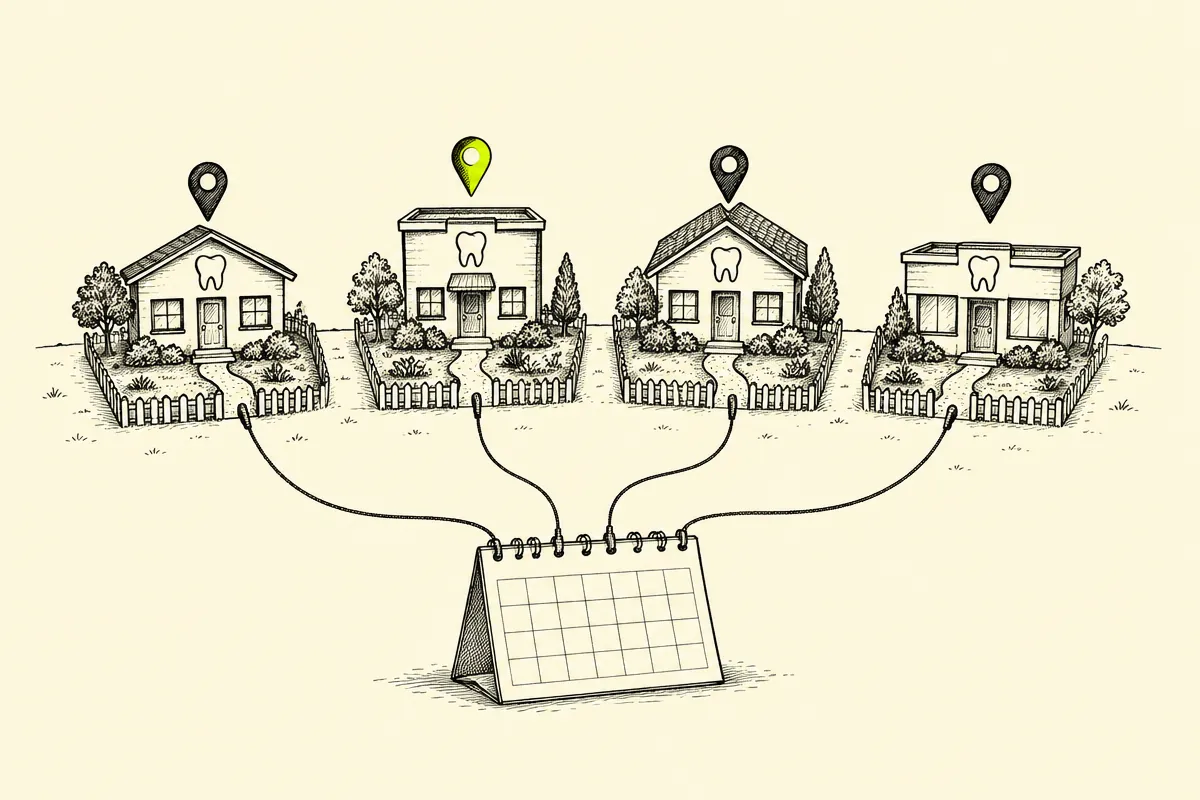
For multi-location brands, specific usually means local. That makes location detail, service detail and a fast lead path the assets that earn the click in a later turn.
What a multiturn conversation can look like by vertical
These are illustrative examples of how a conversation narrows, written to help map each service line:
- Dental groups and DSOs. A first question about dental implants leads to follow-ups about financing, sedation options and which nearby office has openings for a consult.
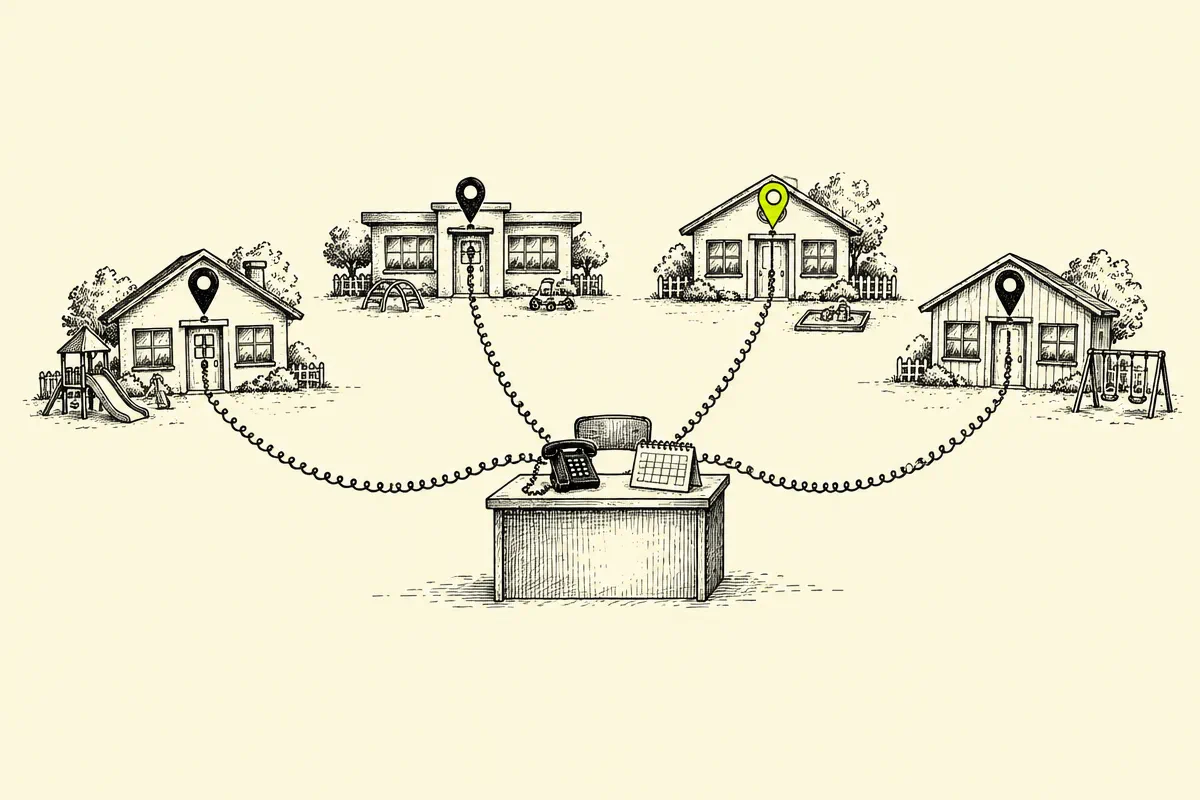
- Childcare and school groups. A first question about preschools nearby leads to follow-ups about ages served, early drop-off, tuition range and how to book a tour.
- Healthcare and pain clinics. A first question about treatment options for back pain leads to follow-ups about referral requirements, insurance and which clinic is closest to work.
- Local service businesses. A first question about water heater repair leads to follow-ups about same-week service, warranty coverage and service area.
Each follow-up is a chance for a location to show up with the exact detail the person asked for. Each one also tells you which page, asset or sitelink needs to carry that detail. The brands that win later turns are usually the ones that already wrote the answer down.
What Google and the trade press have confirmed so far
Here is the current picture, kept as narrow as the sources keep it:
| Item | What the source says |
| Announcement | Search Engine Land reports Google introduced multiturn ads in AI Mode in the United States on October 28, 2026, in the same announcement that expanded AI Mode ads to 10 more markets |
| What they do | Sponsored placements can appear during follow-up queries within an ongoing AI Mode conversation |
| Live sighting | Search Engine Roundtable saw multiturn ads on November 6, 2026, including under the third and fourth follow-up answers |
| Labeling | Google told Search Engine Roundtable the ads are clearly labeled "Sponsored" |
| Why Google is adding them | Search Engine Land notes Google's last earnings call said AI Mode ads monetize at a lower rate than traditional search ads |
Google has yet to publish a separate setup for multiturn placements in these reports. Our earlier guide to Google AI Mode ads for lead generation covers which campaign types can serve in AI Mode today.
6 ways to get ready for multiturn ads
1. Map the follow-up questions for each service line
List the second and third questions people ask before they book. For a dental group that might be insurance, sedation and weekend hours. For a childcare center it is often ages served, tuition range and tour availability. These questions point to the pages, assets and keywords each location needs.
2. Give every location page direct answers
Pages that answer questions plainly give people, and AI Mode, something clear to work with. Each location page works best with hours, services, insurance or enrollment details, parking or access notes and a clear way to book. Our landing page optimization guide covers the conversion side of the same pages.
3. Keep location assets accurate across every office
A follow-up like "which one is closest" is a location question. Clean, current location assets for multi-location accounts help each office show up for its own neighborhood. Check them whenever an office changes hours, moves or adds a service.
4. Feed broad match and AI Max with qualified lead data
Ads in AI-driven placements depend on Google matching intent instead of exact keywords. That works best when the account bids toward booked visits, tours and qualified calls, so the system learns which conversations turn into revenue. Our guide to AI Max for Search lead generation walks through the controls.
5. Write ads and sitelinks for the specific question
A later-turn searcher already knows what they want. Sitelinks to "Book a tour," "Insurance we accept" or "Same-week appointments" match that moment better than a generic brand line. Keep every claim inside what each location actually offers.
6. Plan for limited reporting
A Search Engine Land study of more than 400 accounts notes that Google Ads offers zero breakdown of performance by traditional versus AI search results. Treat multiturn exposure as part of blended Search and Performance Max results for now, and judge it by qualified leads per location, cost per booked visit and lead quality from the CRM.
A weekly review rhythm for AI Mode exposure
- 01Review search terms for longer, question-style queries by location.
- 02Compare cost per qualified lead by office against the prior four weeks.
- 03Check that location assets, hours and sitelinks still match each office.
- 04Read a sample of new leads for fit: right service, right location, right timing.
- 05Update one location page each week with answers to a new follow-up question.
How SalesX prepares multi-location accounts for conversational search
SalesX runs Google Ads only, for U.S. advertisers spending $50k to $500k+ per month, and much of that work is multi-location lead generation. The prep for multiturn ads is the same discipline we apply everywhere: clean location structure, conversion data tied to real outcomes and landing pages that answer the next question. See our multi-location Google Ads services for how we structure those accounts.
A multi-location dental group (DSO) we partner with under NDA saw 40–50% more leads at the same ad spend within 60 days, and 80% of those leads became new patient visits.
Want a senior strategist to pressure-test your account? Request a free X-Audit. It is built for U.S. advertisers spending $50k+ per month, and the analysis typically takes three to five working days after access is approved.
The bottom line
Multiturn ads move Google's ad slots deeper into the conversation, right where local questions get specific. Brands with accurate location detail, direct answers and qualified lead data are in the best position to win those later clicks. Get the basics tight now, and let the follow-up questions work in your favor.
Sources and further reading
- Search Engine Land, Google AI Mode multiturn ads are now rolling out
- Search Engine Roundtable, Google AI Mode Multiturn Ads Are Live - Follow-Up Query Ads
- Search Engine Land, Google expands ads in AI Mode to 10 new markets, with UK and Brazil next
- Search Engine Land, AI search activity is nearly invisible in Google Ads search terms reports: Study
Related reading
FAQ
- What are Google AI Mode multiturn ads?
- They are sponsored placements that appear on the answers to follow-up questions inside an ongoing AI Mode conversation. Google announced them for the United States on October 28, 2026, and they are labeled "Sponsored."
- Are multiturn ads live in the United States?
- Search Engine Roundtable saw multiturn ads live on November 6, 2026, under the second, third and fourth follow-up answers. Rollouts like this often reach accounts and users gradually.
- Do I need a new campaign for multiturn ads?
- The sources so far describe zero separate multiturn campaign or setting. Our guide to Google AI Mode ads explains which existing campaign types can serve in AI Mode today.
- Can I see multiturn ad performance in Google Ads reports?
- A Search Engine Land study notes Google Ads offers zero breakdown of performance by traditional versus AI search results. Judge the impact through qualified leads, cost per booked visit and CRM lead quality by location.
- How do multi-location brands prepare for multiturn ads?
- Give each location page direct answers to common follow-up questions, keep location assets current, and bid toward qualified leads. Sitelinks that match specific questions, such as booking a tour or insurance accepted, help later-turn searchers act fast.
Next step
Want this analysis run on your account?
SalesX audits Google Ads programs spending $50k–$500k+ per month and returns a prioritized roadmap, not a checklist.
Request a Free X-Audit